

If you're a fan of mobile games , you've almost certainly come across the name Among Us on social media, streaming platforms, and in everyday conversations. This popular game of deduction and betrayal has become a true social and cultural phenomenon, racking up downloads and capturing the attention of millions worldwide. Although its initial release went largely unnoticed, circumstances and the social context propelled it to global fame, making it one of the most striking examples of the rise of indie games and the viral power of today's digital community.
Among Us, the unexpected video game phenomenon

The success of Among Us is one of those stories that no one saw coming, not even its own creators at the small independent studio Innersloth. When it first appeared, player numbers were modest and the reception was lukewarm. However, its viral explosion demonstrated the power of online communities and the crucial role of social media in the gaming world. Streamers and content creators like Rubius, Ibai, Auronplay, and even Neymar began playing it live, spreading the enthusiasm to millions of followers. This massive wave led to the game, with its simple yet addictive mechanics, being installed on the mobile devices and PCs of millions, reaching peaks of over 1.5 million players connected simultaneously, surpassing giants like Fortnite and Call of Duty on streaming platforms like Twitch.
The virality of Among Us wasn't just reflected in numbers. Memes, heated debates, gameplay clips, and constant references flooded Twitter, Instagram, TikTok, and YouTube. The game's characters and phrases, like the now-classic " It's the imposter! ", became part of everyday digital language, and the crewmates' colorful aesthetic became easily recognizable worldwide. The explosion also took its developers by surprise, forcing them to reinforce servers and rethink their future, even canceling a potential sequel to prioritize improvements to the original title.
According to data from platforms like Steam and Sensor Tower, Among Us surpassed 500 million monthly active users and over 90 million mobile downloads at its peak. This marked a milestone for the indie industry and solidified Innersloth's position as a key studio on the global scene.

How to play Among Us? Simple and addictive gameplay

The core gameplay of Among Us is reminiscent of classic board and card games like Clue or Sleepy Village, adapting those dynamics to the virtual environment. Players take on the role of crew members on a spaceship or station, with the goal of completing a series of maintenance tasks. However, secretly, one or more players are designated as imposters , whose main objective is to sabotage the mission and eliminate the rest without being discovered.
The game can be played with 4 to 10 players , and at the start of each game, the role of impostor is assigned randomly. Crewmates must cooperate, communicate, and complete tasks to win. When someone suspects another player or finds a "victim," an emergency meeting can be called where everyone discusses, argues, and votes on who they think the impostor is. If the majority votes to eject a player and they are correct, the crewmates move closer to victory. If they are wrong, tension and mistrust increase.
The game's social value lies precisely in this dynamic of doubt, betrayal, deception, and collaboration. Disguising and persuading are as important as investigating and deducing, and the matches become a true battle of arguments and mental strategies. This makes it a particularly fun title to play with friends or strangers, whether in person (each with their own device) or connected via the internet and voice platforms. Even after being eliminated, players can continue to observe the game's progress, maintaining interest and engagement until the very end.


The phenomenon cannot be understood without the global context of the pandemic. In an era marked by isolation, social restrictions, and the need to maintain connections remotely, games like Among Us became a refuge and a digital meeting point. The ability to socialize, debate, and have fun without being physically together was crucial for millions of people. Its ease of access—being free on mobile devices and very inexpensive on PC—combined with its minimal technical requirements (Android 4.4 or higher, iOS, and even browsers via emulators), allowed almost any user to enjoy it.
The collaborative and competitive elements, the ability to laugh, be surprised, and even argue with friends or family remotely, made Among Us not only entertaining but also a way to cope with the global situation. Furthermore, its accessible and cross-platform nature facilitated cross-play between users of different devices, expanding its reach and fostering international communities.


The meteoric rise of Among Us was largely due to the power of content creators and its viral reach on social media. The first matches streamed on Twitch and YouTube by famous gamers and YouTubers, along with the participation of sports stars and celebrities from around the world, attracted the attention of millions of viewers. In fact, well-known platforms registered record-breaking viewership numbers for related content, far surpassing other popular video games. Many of the most iconic moments went viral, generating debates, memes, and challenges on social media that further fueled interest in trying the game.
The participation of celebrities from different fields—from soccer players like Kun Agüero and Neymar to politicians like Alexandria Ocasio-Cortez, who played games to connect with her audience, reaching more than 430.000 simultaneous viewers—allowed Among Us to transcend the purely recreational realm and become a global cultural phenomenon. Even political parties took advantage of the game's popularity to launch messages and campaigns, integrating the term "impostor" into public debate.

Psychological characteristics: Why is it so addictive?

Beyond its fun gameplay, Among Us incorporates psychological elements that make it practically addictive . The constant tension between trust and suspicion, the satisfaction of discovering an imposter, the pleasure of lying and convincing others, and the thrill of surviving in a hostile environment create an intense and captivating emotional experience. Players constantly strive to improve their deduction, deception, and persuasion skills, and each game is different, preventing monotony.
The ability to interact socially, create alliances, and experience unexpected situations gives the game a special appeal for all ages. Even those new to video games find Among Us an ideal entry point, thanks to its low learning curve and fast pace.
Global impact and spectacular figures

The numbers associated with Among Us are evidence of a true revolution. In addition to millions of downloads and active users, it was the most downloaded video game on smartphones worldwide during its peak and broke streaming viewership records. According to various reports, the game reached over 500 million monthly active users and generated tens of millions of dollars in revenue, despite its free-to-play nature on mobile devices (with optional ads and microtransactions).
Its international reach was also meteoric thanks to its availability in several languages (English, Spanish, Portuguese, Korean, among others), which made it easy for players from all over the world to access the game and feel part of the community. The success was such that the developers themselves had to focus their efforts on improving the infrastructure and user experience, prioritizing new features, maps, and special events that maintain interest over time.


The unexpected success of Among Us forced Innersloth to cancel plans for a sequel, deciding to focus all its resources on updating and expanding the existing version. This resulted in new maps, content, server improvements, and game security, responding to the enormous demand and, above all, the loyalty of the community. Anti-cheat tools, customization enhancements, and additional game modes were implemented, ensuring the longevity and freshness of the original concept.
Furthermore, the phenomenon inspired other developers and helped consolidate the potential of indie games in the industry, opening up funding and visibility opportunities for small studios thanks to initiatives like Outersloth, the fund promoted by Innersloth to support independent creators.
Among Us in education, culture, and politics

The influence of Among Us extends beyond entertainment. The game has been adapted as an educational tool in schools, fostering teamwork, argumentation, oral expression, and conflict resolution. Teachers have integrated its dynamics into the classroom to develop students' communication and analytical skills, transforming each game into a playful learning opportunity. This trend, known as gamification , highlights the value of integrating game elements into education, motivating and enhancing the learning process.
On the other hand, popular culture and politics itself have found an effective communication channel in Among Us. Politicians and political parties have used the game's terminology and aesthetics to convey messages, ironize about social situations, or criticize opponents, demonstrating the video game's ability to integrate into public debates and reach young audiences organically.

The role of community and meme creation

One of the most powerful elements of the Among Us phenomenon has been its player community . Thanks to the ease of sharing gameplay, clips, memes, and fan art, users have built a participatory universe that fuels the viral cycle. Memes have been key to the game's spread, generating constant references, inside jokes, and recognizable codes even for those who haven't played.
Forums, Discord servers, chats, and social media groups have served as meeting and discussion points, allowing the experience to transcend the game itself and become part of the collective digital identity.
Accessibility and multiplatform: keys to expansion
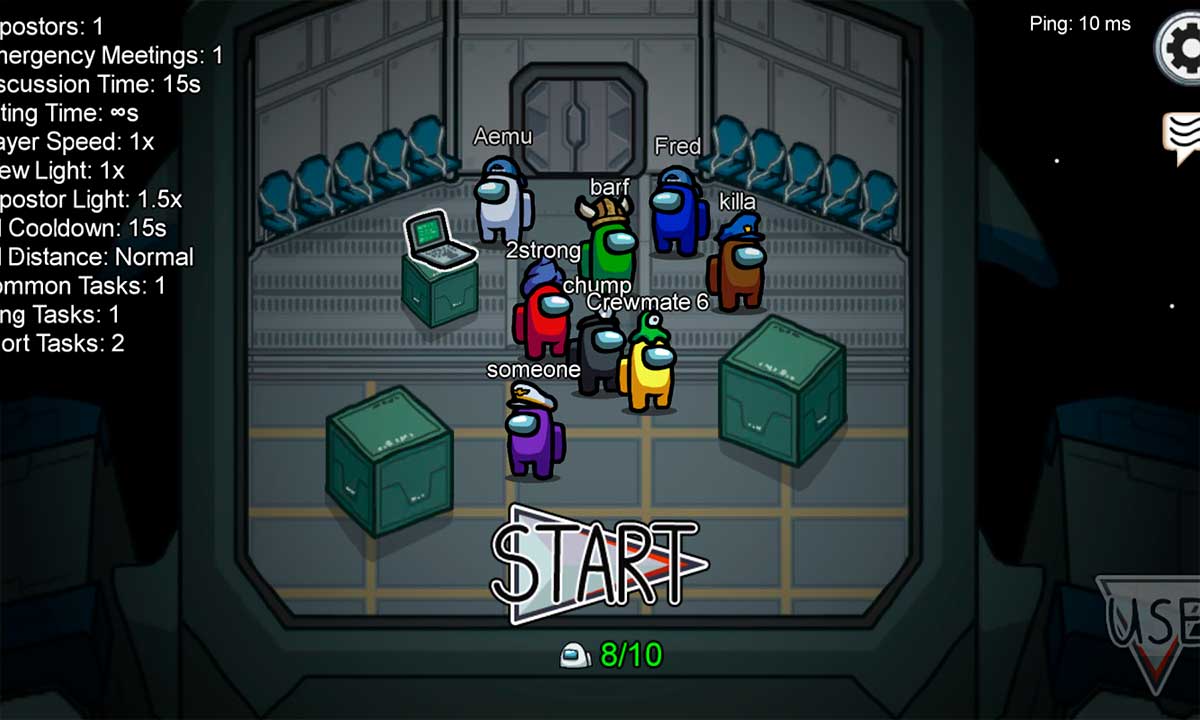
Among Us's free-to-play nature , compatibility with a wide variety of devices, and low hardware requirements have allowed anyone, regardless of their technological or economic level, to access the game. Furthermore, the existence of versions for mobile devices, PCs, and some consoles has expanded its user base, increasing the diversity and size of its community.
Furthermore, constant updates and attention to player feedback keep the experience alive, providing the game with regular updates and renewed challenges.
Currently, you can download Among Us for free from Google Play or other digital stores for Android devices, as well as for iOS and PC at affordable prices on platforms like Steam or Itch.io. All you need is a relatively modern device and an internet connection to play.


And you? Have you played Among Us yet? What attracted you most about its dynamics and community? Did it help you reconnect with friends or experience new forms of social gaming? Share your experience and thoughts in the comments section at the bottom of the article.
The story of Among Us proves that, even in a market saturated with blockbuster productions, ingenuity, accessibility, and the power of community can turn a humble idea into a mass phenomenon with a lasting impact on today's society, culture, and digital entertainment.
Table of Contents
- 1 Among Us, the unexpected video game phenomenon
- 2 How to play Among Us? Simple and addictive gameplay
- 3 A favorable context: the trigger of the pandemic and the rise of social gaming
- 4 Streamers, influencers, and virality: the fuel for success
- 5 Psychological characteristics: Why is it so addictive?
- 6 Global impact and spectacular figures
- 7 The sequel's cancellation and the future as a social game
- 8 Among Us in education, culture, and politics
- 9 The role of community and meme creation
- 10 Accessibility and multiplatform: keys to expansion