

The arrival of Android 6.0 Marshmallow has been one of the most significant transformations within the Android ecosystem . This version not only represents an improvement over previous editions but also adds a substantial number of features designed to optimize the user experience in terms of performance, security, customization, and battery life . Although its initial rollout began, as is traditional, with Nexus devices , it has gradually expanded to a wide variety of brands and models, broadening the opportunities for those who want the latest in mobile innovation.
If you already enjoy Android 6.0 on your mobile or tablet , or if you are waiting for its arrival soon, discover below all the new features and key improvements that have been incorporated, many of them widely anticipated by the community.
Top new features in Android 6.0 Marshmallow

Advanced permission management in applications
One of the most requested features by users for years has been granular control over the permissions that applications request . Until Marshmallow, it was necessary to accept all of an app's permissions to install it, which meant granting access, sometimes unnecessary, to sensitive aspects of the device. Android 6.0 changes this completely , allowing you to individually decide which functionalities (microphone, camera, contacts, location, storage, SMS, etc.) each application can actually access. This capability drastically improves user privacy and security , putting the power of decision in their hands and preventing risks arising from abusive or poorly managed permissions.

Now on Tap: Smarter contextual search
One of the most notable advancements in daily interaction is Now on Tap , a feature that expands the potential of the Google Now assistant. By pressing and holding the home button, Marshmallow analyzes the content visible on the screen and offers contextual cards with useful information: from reviews of a movie mentioned in a chat, to restaurant suggestions if a location appears, contact information, links to related apps, and much more. Although initially available in a limited number of languages, the functionality is constantly evolving and exemplifies the trend toward predictive and contextual assistance.

Fingerprint Authentication: Security and Convenience
Native fingerprint sensor integration is another major innovation in this version. Now, you can not only unlock your device with your fingerprint, but also authorize purchases on Google Play or payments through services like Android Pay . The support is designed to be compatible with multiple applications that require biometric security, allowing developers to take full advantage of this technology and ensuring greater protection and speed in everyday tasks.

Doze Mode: Optimizing battery consumption
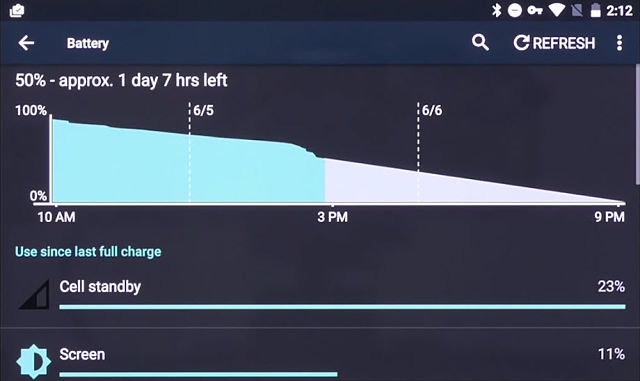
One of Marshmallow's strengths is the significant improvement in energy efficiency. Doze is an intelligent system that detects periods of inactivity (for example, when the device is on a table or while you sleep) and suspends non-essential background processes, syncs, and network activities. According to various tests, this feature can save up to 30% of battery per charge cycle, allowing your phone to stay operational longer without sacrificing important functions. Furthermore, App Standby complements Doze by limiting the activity of apps you rarely use.
Greater flexibility when using USB and microSD memory cards
With Marshmallow, Android adds full support for external USB drives and microSD cards . You can now choose to use them as portable storage (for transferring files) or format them as internal storage , integrating their capacity with the device's memory and allowing for unrestricted app installation and data transfer. This new feature is especially useful on devices with limited storage capacity and on Android TV , making storage expansion easy.

Automatic app backup and restore
The system now automatically backs up your apps and their settings to Google Drive, making it easy to restore them completely after a device change or factory reset. This feature minimizes the loss of data, game progress, or personal preferences, simplifying migration and upgrade processes.

Improved voice interactions and proactive assistant
The new voice APIs allow apps to not only respond to simple commands, but also ask questions and offer actionable options to the user. For example, a music app can ask, “What genre do you want to hear?” and you can respond with your voice. Integrating these interactions leads to greater accessibility, usability, and hands-free operation, especially useful while driving or performing other tasks.

Direct Share: Share directly and quickly
Direct Share simplifies the content sharing process. When you tap share, your frequent contacts appear directly, each associated with the app you use most to communicate with them. This saves you steps and time compared to the old process of choosing an app and then a contact. Ideal for those who regularly share files, links, or photos, this new feature enhances social connectivity from your device.
More features without an Internet connection
Marshmallow adapts to the realities of users who don't always have constant connectivity or want to save on data. Now you can download YouTube videos to play offline and, most importantly, save maps in Google Maps for offline viewing. This feature is especially useful when traveling or moving around areas with limited coverage, avoiding costly roaming charges and allowing access to vital information at any time.

Redesigned lock screen and shortcuts
The lock screen introduces notable changes: the classic call shortcut is replaced by Google voice commands, and to access the camera or these commands you must tap their icon and swipe, avoiding common errors in previous versions. This adjustment improves security and the experience of unlocking and quickly using essential functions on your phone.
Simplified volume control and Do Not Disturb mode
Marshmallow offers a new volume control panel and brings back the popular silent mode that many users missed. Now you can quickly manage the volume of notifications, ringtones, media, and alarms individually. Do Not Disturb mode has been revamped, allowing for much more granular control: you can activate it manually, schedule it for times or events, and even decide which notifications you consider a priority. There's also the option to keep Do Not Disturb active only until the next alarm, a feature highly valued by those who use their phone as an alarm clock.

System User Interface (UI) Configurator
Marshmallow includes a hidden interface configurator accessible from the quick settings, allowing you to customize status bar elements (you can remove icons, display the battery percentage within the icon, and modify available shortcuts). It also integrates a demo mode useful for developers and presentations, which cleans up the notification bar and sets the time to 6:00, making it easier to create more professional-looking screenshots.
More flexible and comprehensive application management
The App Info section has been revamped to provide direct access to features such as storage, permissions, data and battery usage, notifications, default settings, and memory usage. Additionally, the new Advanced Options section in app settings allows you to manage specific permissions, set default apps (browser, SMS, phone), choose which apps can override others, modify system settings, or exclude certain apps from battery optimization mode.

Improvements to text selection and manipulation
Text selection in Marshmallow is much more intuitive and functional. Now, when you press and hold on text, contextual options appear for copying, cutting, pasting, and translating directly with Google Translate , greatly speeding up use in chats, emails, or browsing. Furthermore, the copy and paste menu responds more quickly, eliminating the lag of previous versions.
Native file explorer and advanced storage management
The system introduces a file explorer integrated into the storage settings. With this tool, you can browse all the folders on your device , copy, move, or delete files without needing third-party apps. This addition addresses a long-standing user request and makes managing documents, images, and music much easier.
Improved RAM management
A new Memory section in the settings lets you see the average RAM usage for each app, review statistics over 3, 6, 12, or 24-hour periods, and identify apps that are consuming excessive resources. This helps pinpoint potential causes of slow performance and optimize overall device performance, giving advanced users more precise control over their hardware.
Bluetooth pen support and new ways to interact
Marshmallow adds official support for compatible Bluetooth styluses, opening up new possibilities in productivity, note-taking, and artistic applications that require precision and sensitivity to pressure or stylus buttons.
Improved connectivity and accessory support
The system now supports Hotspot 2.0 version 1 on devices that support the 5 GHz frequency, improving the speed and stability of Wi-Fi hotspots. In addition, continuous Bluetooth device scanning helps improve location accuracy, even with Bluetooth disabled (a feature that can be disabled for greater privacy). Furthermore, it features support for USB 3.1 Type-C , enabling faster and reversible charging and data transfers, as well as the ability to use your device to charge other devices.

Other innovations and useful details
- 4K display: Marshmallow enables 4K graphics rendering for compatible apps, ideal for devices with high-resolution displays.
- Simple network settings reset: You can now quickly restore Wi-Fi, Bluetooth, and APN settings from Settings.
- New settings finder: Available only on the main settings screen, avoiding confusion when searching for options.
- Disable pop-up notifications: Possibility to disable, app by app, floating notifications that appear on the screen, improving concentration.
- Updated emojis: Over 200 new Unicode 8.0 emojis included for more fun and modern communication.
- Battery search in mAh: App power consumption is now displayed in mAh, making it easier to identify power-hungry apps.
- Visible security patch level: From the device information menu, you can check the date of your last security patch installation.
- Default USB modes: For safety reasons, when you connect your phone via USB, charging is only available until you manually select the file transfer mode.
- Customizing App Links: You can define which apps open automatically for certain links, avoiding having to select which app to open them with each time.
- Demo mode and developer options: Additional tools for system debugging and presentation.
Minor Update: What's New in Android 6.0.1 Marshmallow
Following the initial release, Android 6.0.1 brought small but valuable improvements:
- New emojis, updating support for the latest Unicode standards.
- Double-tap the power button to open the camera, optimizing rapid image capture.
- Changes to the interface of large tablets, adapting the layout of the navigation buttons for greater comfort.
- Connectivity and stability improvements, optimizing cache management and overall performance.
- Expanded Do Not Disturb Options, allowing you to program silences until the next alarm.

Android 6.0 Marshmallow has established itself as a robust, mature, and versatile version. Thanks to its comprehensive set of new features in battery saving, permissions, security, backup, and usability, it stands as a benchmark in stability, customization, and performance. Whether you use your mobile device for productivity, entertainment, or communication, you'll enjoy an operating system designed to respond effectively, with privacy and complete adaptability to your needs and current lifestyles.