

If you're someone who gets carried away by advertising or checks technical specifications when looking for a new Android smartphone , you've probably come across terms like Quad Core , Octa Core , or even Deca Core referring to the processor. The common belief is that the more cores a phone has, the better its performance will be. However, this isn't always true and can lead you to make a poor purchase decision if you don't understand how the hardware in these devices actually works.
What are the cores of a mobile processor used for?

In simple terms, each processor core is an independent unit capable of executing instructions autonomously. This allows a single chip to perform multiple tasks simultaneously, such as listening to music, browsing the internet, editing documents, and keeping apps updated in the background. This is the principle behind true multitasking, so essential to the modern mobile experience.
The function of the cores goes far beyond simply increasing speed: they distribute workloads to maximize efficiency and reduce wait times. However, the true potential of a multi-core processor is only realized if the architecture and operating system are well optimized. For example, modern Android systems can distribute tasks among the different cores, but not all applications are designed to utilize multiple cores simultaneously.
Do more cores always mean more power?
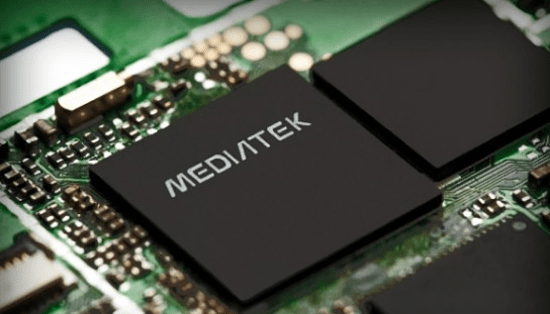
There's a common myth that the more cores a processor has, the faster the phone will be. This idea has been perpetuated by marketing and impressive numbers, but the reality is much more complex . Having more cores doesn't guarantee better performance at all if other aspects of the processor or the device itself aren't up to par.
First, the clock speed (measured in GHz) of the cores is crucial. A high-frequency quad-core processor can be significantly faster at demanding tasks than a low-frequency octa-core processor. Furthermore, energy efficiency and intelligent core management are key, allowing the system to assign light tasks to low-power cores and reserve the most powerful ones for processing-intensive situations, such as gaming or video editing.
On the other hand, operating system and application optimization also plays a crucial role. Many apps are not yet ready to take advantage of multi-core processors, which means that some cores may remain underutilized most of the time.
How do multicore processors work? The role of architecture

One of the biggest innovations in mobile processor design is the big.LITTLE architecture . This technology combines high-performance cores (big) with energy-efficient cores (LITTLE) on a single chip. The operating system chooses which cores to use based on the workload. For simple tasks like checking email or listening to music, the LITTLE cores, which consume less battery power, are activated, while the big cores, which deliver their full power, are used for gaming or video editing.
Furthermore, kernels are usually grouped into clusters and do not always all work at the same time. For example:
- High-performance cluster: Ideal for gaming, graphics processing or advanced editing activities.
- Low power cluster: responsible for keeping the operating system and apps light without draining the battery.
Some architectures allow up to 10 cores to be organized into multiple clusters to cover all kinds of scenarios, from maximum energy efficiency to maximum sustained performance. However, it's important to know that a processor with more cores doesn't necessarily mean they are all active at the same time: efficiency depends on how the system utilizes them.
What is more relevant: GHz or number of cores?

A recurring question is whether to prioritize clock speed (GHz) or the number of cores . Both are important, but their relative importance varies depending on the type of user and usage habits.
- High clock speed It is essential in demanding tasks that require a single fast processing thread, such as some games or certain professional applications.
- More cores They benefit multitasking and apps that distribute their work across multiple threads, such as video editing, rendering, or virtualization.
In practice, the most efficient approach is to find a balance between both factors. A six- or eight-core processor with a decent clock speed usually offers a smooth experience in almost any situation, but the key lies in optimizing the system and apps.
How does software and app optimization affect your business?

Many users overlook the fact that the actual ability to take advantage of multiple cores depends on the software . The operating system, like Android, is designed to distribute tasks across different cores. But this is only useful if the applications are also programmed to work with multiple threads (multithreading). Otherwise, they may only be using one or two cores, regardless of how many the processor has.
Android has been improving its multitasking and resource management, but apps must be well-developed to truly take advantage of the multi-core architecture. For example, browsers like Chrome and modern games are often optimized, while simple or older apps aren't and only use one core.
This means that, in many cases, the difference between a quad-core and an octa-core processor may not be noticeable in everyday use with simple applications, but it will be in intensive multitasking or demanding apps. Furthermore, the manufacturer's custom interface or ROM can make a significant difference in resource management.
The importance of RAM and other components

A crucial detail that often goes unnoticed is the amount and speed of RAM . A multi-core processor can only unleash its full potential if it has enough RAM to store and manage open applications and temporary data.
Most mid-range devices start with at least 2GB of RAM , but to truly take advantage of modern processors, it's recommended to opt for models with 4GB or more . If the RAM is insufficient, the operating system will resort to the storage memory (which is much slower), causing slowdowns, lag, or forced app closures.
Therefore, optimal performance depends on a balance between processor, RAM, fast storage (UFS, eMMC), and good software management.
How do architecture, nanometers, and energy efficiency influence things?
In addition to the number of cores and speed, there are other technical elements that affect performance and battery life:
- Architecture: Core types such as Cortex-A53, Cortex-A73, Cortex-A77, etc. Each offers a different balance between power and efficiency. Processors with the 64 bits have meant a significant leap in performance for smartphones.
- Manufacturing size (nanometers): The smaller the transistor size (e.g., 14nm, 10nm, 7nm), the lower the power consumption and the higher the performance per watt. This allows more cores to be integrated into the same space without increasing power consumption or heat.
- SoC (System on Chip): The processor isn't just a standalone device; it integrates the CPU, GPU, memory, connectivity controllers, image processor, and more, all on a single chip. The overall quality of the SoC determines the user experience (e.g., Snapdragon, Exynos, MediaTek, Kirin).
These innovations make it possible for multi-core phones to be not only powerful, but also efficient and have long battery life.
Cores, Threads, and Multitasking: What Are Threads?
In the realm of processors, in addition to physical cores, there is the concept of threads . These are independent sequences of instructions within a program. During multitasking, processors can execute multiple threads simultaneously, each on a different core, or even, in advanced architectures, multiple threads per core (technologies such as HyperThreading or Simultaneous Multithreading).
- An 8-core processor without multi-core per thread runs 8 threads simultaneously.
- If each core can handle 2 threads, an 8-core processor could run up to 16 threads.
This is essential in tasks such as video editing, advanced gaming, artificial intelligence, or virtualization, where many concurrent operations are required.
When you really need a lot of cores in your Android phone

The decision depends on your profile and needs:
- Basic users: For everyday tasks like WhatsApp, browsing, music, and social media, a quad-core processor with decent speed and 4GB/2GB of RAM will be more than enough.
- Average users: If you're someone who uses multiple apps at once, makes video calls, multitasks, and plays casual games, look for a 6- or 8-core processor with at least 4GB of RAM.
- Advanced users and gamers: If you edit photos and videos, play demanding titles, or work with professional apps, it's best to opt for octa-core (8-core) processors or higher, with high frequencies, advanced architecture, and 6GB/8GB of RAM or more.
Don't forget that, in addition to the processor, the GPU is key for video games and graphics, as well as storage speed and battery efficiency.
Does the number of cores affect battery consumption?

It may seem contradictory, but having more cores can actually improve battery life . Why? Modern processors, thanks to the big.LITTLE architecture and cluster management, allow simple tasks to run on low-power cores. This way, the full complement of powerful cores is only activated when needed (for example, when gaming or editing videos), and the rest of the time energy consumption is minimal.
This means that a phone with many cores can be more efficient if the software manages them well, as it avoids constantly running the processor at maximum power. Of course, other factors such as battery capacity, screen resolution, and intensive network usage also play a significant role.
Multi-core processors and everyday performance
In everyday use, you'll rarely notice the difference between a phone with many cores and one with fewer if you only use simple apps. For example:
- Music playback: One core can be processing the music app while another handles notifications and another monitors connectivity.
- Web navegation: Cores can be split between rendering the page, loading images, and keeping the connection active.
- Document editing: One core is responsible for saving changes and another for responding to the touch interface.
- Background updates: Android distributes processes among the most efficient cores based on demand.
- Security processes: A core can be running antivirus or security checks without you noticing any slowdowns.
Only in truly demanding scenarios will you see the difference in favor of processors with more cores:
- Professional video and audio editing
- 3D rendering and next-generation gaming
- Working with artificial intelligence or machine learning on the device
- Virtualization or use of virtual machines
- Scientific or data simulation applications
Key features to review before choosing a processor
When you go to buy a mobile phone, it is essential to review several technical aspects, beyond the number of cores:
- Type of cores: Not all cores are created equal: A35, A53, A55, A73, A76, A77, X1, etc. High-end cores offer greater performance, although they tend to consume more power. Modern processors often combine powerful cores with others focused on efficiency.
- Clock speed (GHz): The higher the maximum frequency, the greater the immediate processing capacity, but it can also increase consumption.
- Manufacturing process (nanometers): The smaller the manufacturing size, the better the energy efficiency and heat generation. The most advanced chips are manufactured using 10nm, 7nm, or even faster processes.
- Integrated GPU: If you play games or use graphics-intensive apps, the GPU is just as important as the CPU. For example, Adreno, Mali, or PowerVR.
- RAM: 4GB is a reasonable minimum for smooth multitasking these days; 6GB or 8GB are optimal for mid-range and high-end smartphones.
- Quick storage: Types like UFS 2.1, 3.0, or 3.1 improve app loading and file transfer.
- ROM Optimization: Clean or well-designed software layers (pure Android, optimized versions) manage resources better.
How many cores do you really need? Case studies
There's no universally best core count: it all depends on the type of user, the tasks you perform, and your durability expectations. Here are some common situations:
- If you want your phone to last more than two years without slowdowns, look for 6- or 8-core processors, recent architecture, and 4GB of RAM or more.
- For demanding tasks (gaming, editing, creativity), prioritize octa-core processors, advanced GPUs, and ample RAM.
- If your use is basic or you're looking for economy, a recent quad-core and 3GB of RAM may be sufficient, especially if the ROM is well optimized.

The impact of advertising and how to avoid falling prey to core marketing
The smartphone industry and its advertising campaigns have turned the number of cores into a flagship feature, but it's only one part of real-world performance . Don't be swayed by flashy numbers: the whole picture is what matters. Read technical reviews, compare user experiences, and check performance tests in real-world scenarios. Don't forget to consider battery life, operating system updates, and brand support to ensure your phone continues to perform well for years to come.

Differences between mobile and desktop processors
It's important to clarify that the use of multi-core processors in smartphones doesn't always serve the same purpose as in desktop computers. While PCs typically prioritize maximum power, mobile devices prioritize energy efficiency and a balance between performance and power consumption . Therefore, even if a smartphone has 8 or 12 cores, these are regulated to prevent overheating and rapid battery drain, using distributed tasks and dynamic power management based on demand.
Furthermore, in smartphones, core clusters tend to be heterogeneous (some powerful, others efficient), while in computers the trend is to use homogeneous cores and focus on raw power.
How do you know how many cores your phone has?
There are several easy ways to find out your processor configuration:
- Check the technical specifications on your device's official website or on specialized pages.
- Use apps like CPU-Z, AIDA64, or Device Info HW to get detailed information about the SoC, cores, frequencies, and architecture.
Which manufacturers lead in mobile processors?
In today's market, the main players in mobile processors are:
- Qualcomm Snapdragon: Very popular in the high and mid-range, with a good combination of performance and efficiency, along with a high-end Adreno GPU.
- MediaTek: It offers highly competitive solutions in terms of quality and price and relies on advanced multi-core architectures.
- Samsung Exynos: Integrated into many Galaxy models, they stand out for their innovation and performance, although they have undergone phases of efficiency improvements.
- Apple (A series): Although they don't run Android, their chips integrate fewer cores, but with extremely high power per core and outstanding efficiency thanks to their proprietary design and software-hardware optimization.
- HiSilicon Kirin: Present in Huawei mobile phones, they have excellent results in artificial intelligence, although their availability has been limited by sanctions.

Does the number of cores affect other mobile functions?
In addition to speed and multitasking, modern processors handle tasks such as artificial intelligence for photography and virtual assistants, 5G connectivity, image processing, and data encryption. All these processes benefit from efficient multi-core performance , provided the SoC design and software are up to the task.
So, the next time you compare phones, don't just focus on the number of cores . Look for a balance between architecture, clock speed, RAM, and energy efficiency. A well-balanced processor, even with "only" 4 or 6 cores, can outperform a poorly optimized octa-core processor. Remember: real-world performance depends on the whole package and how well all the hardware and software work together.

Table of Contents
- 1 What are the cores of a mobile processor used for?
- 2 Do more cores always mean more power?
- 3 How do multicore processors work? The role of architecture
- 4 What is more relevant: GHz or number of cores?
- 5 How does software and app optimization affect your business?
- 6 The importance of RAM and other components
- 7 How do architecture, nanometers, and energy efficiency influence things?
- 8 Cores, Threads, and Multitasking: What Are Threads?
- 9 When you really need a lot of cores in your Android phone
- 10 Does the number of cores affect battery consumption?
- 11 Multi-core processors and everyday performance
- 12 Key features to review before choosing a processor
- 13 How many cores do you really need? Case studies
- 14 The impact of advertising and how to avoid falling prey to core marketing
- 15 Differences between mobile and desktop processors
- 16 How do you know how many cores your phone has?
- 17 Which manufacturers lead in mobile processors?
- 18 Does the number of cores affect other mobile functions?