

The Samsung Galaxy S8 was hailed as one of the most outstanding Android phones upon its release, marking a turning point in the high-end segment. Besides its top-tier specifications, one aspect that generated much debate was its initial price, around €800, a significant sum for most users. However, some time after its launch, it's common to find the Galaxy S8 at much more accessible prices, around €500 or even less in the second-hand and refurbished market.
It's true that most Android mobile users look for devices for everyday tasks like sending WhatsApp messages, checking social media, or taking the occasional photo. However, there are key features and details that distinguish a Samsung Galaxy S8 from a budget Android smartphone costing around €200. Below, we'll thoroughly analyze and compare all the practical, design, technological, and functional advantages that the Galaxy S8 offers compared to more affordable models, based on both direct experience and leading expert reviews and comparisons.

Main advantages of the Samsung Galaxy S8 compared to a 200 euro smartphone
Infinity Display and visual quality
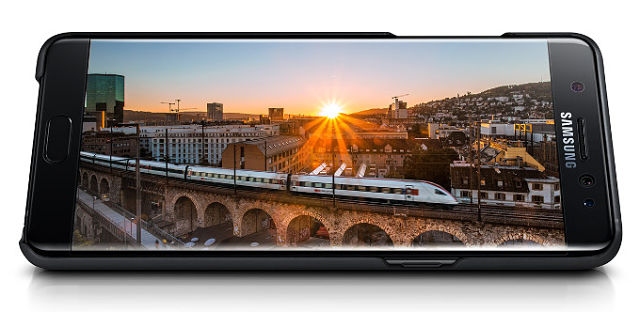
One of the most outstanding features of the Samsung Galaxy S8 is its 5,8-inch Super AMOLED display with QuadHD+ resolution (2960 x 1440 pixels). This curved, almost bezel-less Infinity Display provides an immersive and high-quality viewing experience, far surpassing the average budget device, whose resolution, size, and technology are typically lower. Furthermore, Super AMOLED technology guarantees vibrant colors, deep blacks, and high brightness, making the device easy to use even in bright sunlight.
In contrast, the vast majority of phones in the €200 range feature LCD or IPS displays with Full HD or even HD+ resolution, with lower pixel density, less vibrant colors, and considerably lower contrast. This impacts not only multimedia quality but also everyday comfort, content viewing, and the experience with graphically demanding video games or applications.
HDR support and advanced multimedia playback
The Samsung Galaxy S8 was a pioneer in offering HDR support on its screen, a feature inherited from the premium television segment. HDR allows for the reproduction of images and videos with a superior dynamic range, revealing details in the darkest and brightest areas that other devices simply cannot achieve. This compatibility is especially useful for watching series, movies, or videos on platforms like Netflix, YouTube, or Amazon Prime Video, which already offer HDR content.
Budget phones have been tentatively incorporating HDR in very recent generations, but it's still a notable absence in most mid-range and low-end models, which limits the multimedia experience. Furthermore, since the screens on budget phones tend to have lower maximum brightness and less accurate calibration, even when they include HDR support, the results are noticeably worse.

Processor and overall performance
At launch, the Samsung Galaxy S8 featured the Exynos 8895 processor (or Qualcomm Snapdragon 835 depending on the region), both high-end chips with eight cores and performance far superior to that of processors typically found in €200 phones. This difference not only translates into smoother operation when using demanding applications and multitasking, but the Galaxy S8 was also optimized to handle demanding video games and basic video and photo editing tasks without significant slowdowns.
Performance in budget phones has progressively improved, but processors like the Snapdragon 685 or mid-range chips from MediaTek, while adequate for everyday use, have noticeable limitations with demanding applications, long periods of use, or multiple apps open simultaneously. In benchmarks and real-world experience, the S8's leap over a budget phone is, even today, more than the spec sheets show.
RAM and internal storage
The Samsung Galaxy S8 comes with 4GB of RAM and 64GB of internal storage , expandable via microSD. While 64GB of storage has become common in mid-range phones, cheaper models still often offer 32GB (or even 16GB in some cases), forcing users to constantly manage available space and delete photos, videos, and apps.
For its part, the Galaxy S4's 8GB of RAM allows for running apps in the background, quickly switching between tasks, and maintaining good performance with multiple apps open—something that budget phones with 3 or 4GB of RAM can match in terms of specifications, but not always in real-world experience due to a lack of optimization. Furthermore, the speed of the S2.1's RAM and UFS 8 storage surpasses that of slower memory in many affordable handsets.
Bluetooth 5.0 and advanced connectivity
The Samsung Galaxy S8 was the first smartphone to implement Bluetooth 5.0 , a much faster, more efficient, and more versatile version than its predecessors. This allows, among other advantages, the simultaneous connection of two Bluetooth audio devices, greater range and lower latency, as well as more stable and faster data transmission. These features are especially useful for those who regularly use wireless speakers, headphones, or smart accessories.
In contrast, many budget phones still feature Bluetooth 4.2 or earlier, with shorter range, lower transfer rates, and no support for new features like dual audio, which can result in a limited experience at home or on the go.
Premium design and construction materials
One of the defining features of the Galaxy S8 is its curved, almost bezel-less design and body made of glass and aluminum . The use of premium materials gives it an elegant appearance and a noticeably superior feel in hand compared to most budget phones, which typically use polycarbonate (plastic) casings, flimsy frames, or less refined finishes. Furthermore, the S8 is remarkably compact and lightweight (155 grams), measuring 148,9 x 68,1 x 8 mm, making it easy to handle and carry.
In the €200 price range, while there are phones with pleasing designs and imitations of premium finishes, the combination of lightness, durability, and sophisticated aesthetics of the S8 is rarely achieved. Samsung's engineering work to reduce the bezels and provide the device with an immersive experience still distinguishes it today from more affordable offerings.
Water and dust resistance
The Samsung Galaxy S8 is IP68 certified , giving it complete dust resistance and full protection against immersion in water for a certain period of time and depth. This protection is especially valuable in everyday situations such as accidental splashes, use in the rain, or at the beach, and provides added peace of mind in case of accidents.
Water resistance, although increasingly common in expensive phones, remains a rarity in the €200 segment. Some models have begun to offer it, but generally with lower certifications (IP54 or IP67), which are more limited against immersion. Furthermore, Samsung's level of sealing and build quality have proven to be especially reliable, a positive point for those looking for a durable device.
Battery and autonomy
The Samsung Galaxy S8 has a 3.000 mAh battery . While this capacity might seem modest compared to budget phones boasting 4.000 or even 5.000 mAh batteries, the efficient processor and optimized screen allow for approximately 12 hours of battery life under heavy use . Furthermore, it features fast charging, a key difference compared to many budget phones whose "fast charging" is limited or nonexistent.
It's worth mentioning that cheaper models may theoretically have longer battery life, but their energy management is less efficient, charging takes considerably longer, and sometimes the operating system isn't as optimized, which can cause slowdowns over time.
Cameras: professional photographic quality
The Samsung Galaxy S8's camera was a benchmark at its launch and still competes favorably against mid-range phones today. Its 12-megapixel sensor with an f/1.7 lens, optical image stabilization (OIS), and phase detection autofocus allows it to capture sharp, bright images with minimal noise, even in low-light conditions. The 8-megapixel front-facing camera with autofocus also stands out compared to most affordable phones.
In €200 phones, it's common to find multiple cameras with sensors of up to 50 or even 108 megapixels, but actual image quality is often subpar, especially in night photography, detail, dynamic range, and video. In many cases, the secondary sensors barely contribute anything, and the optical quality, processing, and capture speed clearly differentiate them from the S8. Some phones even boast Samsung sensors—a testament to the brand's reputation—although the optics and software aren't comparable.
Security and advanced unlocking methods
Another differentiating factor of the Galaxy S8 compared to budget phones is the presence of an advanced iris scanner , which complements the traditional fingerprint reader. This biometric authentication technology allows you to unlock the phone simply by looking at the screen, providing convenience and an extra layer of security. Although the fingerprint reader's placement was criticized by some users, the iris scanner represents an innovative alternative that most affordable phones have yet to implement.
Low-cost phones often feature conventional fingerprint readers, which are often slower and less accurate, and software-based facial unlocking, which offers less protection. The integration of several biometric options in the S8 reinforces its premium character.
Bixby virtual assistant and smart features
The Samsung Galaxy S8 debuted Bixby , Samsung's own virtual assistant, which allows users to control the device with voice commands, manage routines, search for information, and take advantage of smart shortcuts integrated into the operating system interface. While Google Assistant is the leading assistant on Android, Bixby offers specific functionalities for managing applications, controlling the camera, and personalizing the user experience at a deeper level.
The presence of proprietary virtual assistants on €200 phones is practically negligible, relying entirely on Google Assistant for basic tasks. The customization and advanced voice control options offered by the S8 are an indisputable added value.
Software updates and support
Samsung's update policy for its high-end phones has always been longer and more regular than that of budget phones, which often remain stuck on older versions of Android without access to new features or security patches. The Galaxy S8, despite the passage of time, has received multiple updates and security improvements over the years, extending the device's lifespan and making it a more secure option compared to the planned obsolescence typical of cheaper models.
Direct comparison: Samsung Galaxy S8 vs. the best-selling $200 phones
To better understand the differences, it's helpful to review what the most popular phones in the €200 segment currently offer, according to experts from Xataka and other specialized media:
- Xiaomi Note 13 Redmire: 6,67-inch AMOLED display, Snapdragon 685 processor, triple camera (108MP main), 5.000 mAh battery, 4-6GB RAM, 128GB storage, side fingerprint sensor.
- LITTLE M6 Pro: High-amp battery, competitive processor, 50MP camera, USB-C, yet with less premium build and no advanced water resistance.
- Motorola G54: Large screen, battery optimization, plastic body, multiple cameras with acceptable results.
- Samsung Galaxy A15: Well-known brand, AMOLED screen, decent camera setup, plastic materials, just enough performance for everyday use.
While these models have democratized access to features previously reserved for expensive phones (large AMOLED screens, high-megapixel cameras, giant batteries), they still lag behind the S8 in key aspects: build quality, curved screen, true HDR, water resistance, raw power, software optimization, advanced biometric technology, and audiovisual experience . For more information on the differences between these models, don't hesitate to consult our detailed comparison in "Is it necessary to get insurance for your Android phone?".
The answer will depend on each user's priorities and usage. The Samsung Galaxy S8 remains a benchmark for elegance and premium features, offering a superior user experience in terms of screen, materials, camera, and advanced functions . If you're looking for the ultimate in battery life or high-megapixel cameras for occasional photography in good lighting, the current mid-range market is more than adequate. But if you value image quality, durability, design, advanced audio, and the overall experience, upgrading to the S8 is more than justified, especially if you can find it at a reduced price on the refurbished market.
Many budget phones use components that were once from higher-end ranges, but the integration, optimization, materials, and user experience still put devices like the Galaxy S8 a cut above.
Feel free to share your opinion or experience using a Galaxy S8 versus a cheaper phone in the comments, enriching the debate and helping other users make the right decision.
